
Tutoriel d’entraînement
TEF IRN


News / TEF /
Monday 17 March 2025
| Application | Current required level | Required level from the 1st of January, 2026 |
| Multi-annual Residence Permit | – | A2 |
| Long-term Residence Permit | A2 | B1 |
| French Naturalization | B1 | B2 |
Following the evolution of the TEF IRN, the total duration of the test will be 1h30 instead of 1h20. Let’s take a closer look at the upcoming changes.
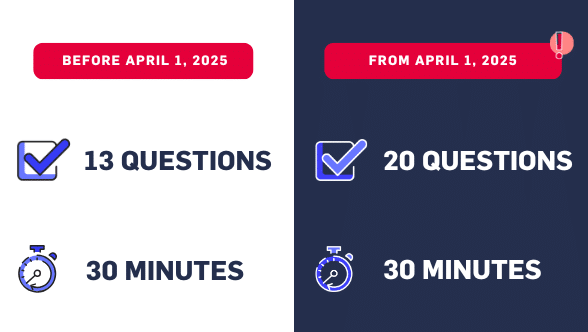
The test will consist of 2 parts:
Part 1: 10 questions of different levels (15 minutes)
Part 2: 10 questions adapted to your level (15 minutes)
What’s changed: the format and number of questions.
What’s new: you’ll have to read more documents from real-life situations, including administrative documents.
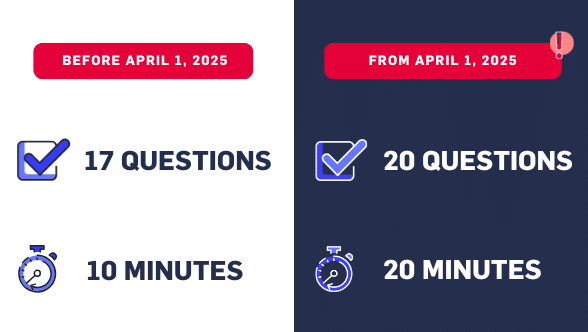
The test will be divided into 2 parts:
Part 1: 10 questions of varying levels (10 minutes)
Part 2: 10 questions adapted to your level (10 minutes)
What’s changed: the format and the number of questions.
What’s new: you’ll hear more audio from everyday life, such as answering machine messages, announcements, on-the-street interview clips and interviews.
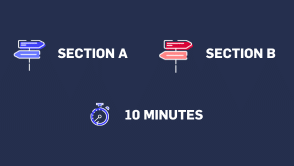
For each section, the examiner will read out the topic to you.
Section A : A telephonic conversation with a friend to obtain information (5 minutes)
Section B: Helping a friend to make a decision (5 minutes)
What’s changed: Sections A and B are interchanged.

Section A: Write a message to a friend inquiring about him (10 minutes – 40 words)
Section B: An essay to convince someone about your motivations (20 minutes – 100 words)
What’s changed: the number of words for Section B.
Let’s get practical! Below you’ll find all the tools you’ll need to prepare for the exam.
French departments in American universities are currently evolving in a rapidly changing environment. Faced with declining enrollment in the humanities and competition from fields perceived as offering more direct career pathways, many instructors are rethinking their teaching practices and course offerings.
Proficiency in French is a key factor in the path to professional integration. It determines access to employment, understanding of workplace norms, and the ability to thrive long-term in a professional environment.
From 1 January 2026, the Civic Exam becomes compulsory in France (metropolitan and overseas territories). You must pass this test if you are planning to submit your first application for a…